Garage Door Service

Licensed. Bonded. Insured.

Danny’s Garage Doors 101 Services

Ohio

24/7 Emergency

Garage Door Repair

Call Us Now For An Estimate

Garage Door Repair in Cleveland: Your 2026 Local Guide

You press the wall button before work, and instead of the usual steady lift, you get a loud bang, a grinding scrape, or nothing at all. Now the car is trapped, the door looks wrong, and you're standing in the garage wondering if this is a quick fix or something you shouldn't touch.

That's a common moment around Greater Cleveland, especially when weather swings, daily use, and older hardware all catch up with a door at once. A broken garage door can be a hassle, but it can also turn into a safety issue fast if the door is crooked, heavy, or hanging on one side.

The good news is that you don't need to guess. Most garage door problems leave clues. The sound matters. The way the door sits matters. Even whether the opener hums or stays silent tells you something useful. If you know what to look at, you can decide what's safe to check yourself and what needs a technician right away.

That Awful Sound Your Garage Door Just Made

A garage door usually gives some warning before it quits completely. It may rattle more than usual for a week, hesitate at the bottom, or squeak every time it rolls along the track. Then one morning it finally lets go.

In Cleveland-area homes, I've seen the same scene over and over. A homeowner hears a sharp pop from the garage that sounds like something fell off a shelf. They step out, hit the opener, and the door rises a few inches and stops. Or the opener runs, but the door barely moves. That sound often points to a balance problem, not just a noisy door.

Not every noise means the same thing

A squeak usually means friction. Dry rollers, hinges, or bearings are often behind it.

A grinding sound points more toward worn rollers, track issues, or opener strain.

A sudden bang is the one that gets my attention. When a door makes one loud explosive sound and then won't lift normally, something important in the lifting system may have failed.

Practical rule: If the sound was sudden and violent, stop using the opener until you know what failed.

What homeowners often do first

Individuals often try the button again. Then they try the remote. Then they pull the red cord without checking whether the door is fully closed. Sometimes that helps. Sometimes it makes a bad situation worse, especially if the door is already unbalanced.

A better first move is to pause and look. Is the door level? Are the tracks bent? Do you see a loose cable near the bottom corner? Did the opener move but the door stay put?

If the issue is minor noise, start with safe maintenance and simple checks. If your door is only squeaking and still operating normally, this guide on how to fix a squeaking garage door is a good place to begin.

The real problem is usually smaller than it feels

When your garage door fails, it feels urgent because it affects security, daily routine, and access to your car. That part is real. But the diagnosis is often straightforward once you match the symptom to the part that's acting up.

That's why the next step matters more than panic. You don't need to know every part of the system. You just need to know what your door is trying to tell you.

What Your Garage Door Is Trying to Tell You

Garage doors don't fail randomly. They usually fail in patterns. If you can describe the symptom clearly, a repair goes faster because the likely causes narrow down right away.

When the door looks crooked or hangs on one side

A door that lifts unevenly is telling you not to keep running it. In most cases, that points to a cable issue, a track problem, or a spring problem that's throwing the whole door out of balance.

A crooked door is like a shopping cart with one wheel jammed. You can force it, but every extra push makes the damage worse. The opener wasn't built to drag a twisted door up the tracks.

When the opener runs but the door doesn't move

If you hear the motor humming and the chain or belt moves, but the door stays put, think in two directions. Either the opener is disconnected from the door, or the lifting system has failed and the opener can't do the job on its own.

This is also common after someone pulls the emergency release and forgets the trolley is still disengaged.

A garage door opener doesn't actually lift a healthy door by brute force. A balanced door does most of the work through the spring system.

When the door starts down and then reverses

That symptom often sends homeowners straight to the opener, but the opener is usually reacting to something. Safety sensors may be dirty or misaligned. The track may have debris. The door may be binding because rollers are worn or a section is bent.

If the door closes partway and pops back up, the system is basically saying, “I think something is in the way.”

When the door is loud all of a sudden

A noisy door matters more when the sound changes abruptly. A little roller noise that slowly gets worse is one thing. A new scrape, clunk, or shudder is another.

Listen for these differences:

  • Metal scraping usually points to track contact, loose hardware, or a roller that's no longer rolling.
  • Repeated popping can mean the door is binding as it moves.
  • A strained opener sound often means the opener is trying to compensate for a door that's too heavy or out of balance.

Common Garage Door Symptoms and Causes

Symptom Likely Cause Next Step
Door is crooked or uneven Cable issue, spring issue, or track problem Stop using it and inspect visually from a safe distance
Opener runs but door doesn't move Disconnected trolley, failed lift system, or opener engagement issue Check whether the opener is connected before calling
Door reverses before closing Sensor alignment issue, obstruction, or door binding Clean sensors and check the path of the door
Loud grinding or scraping Worn rollers, loose hardware, or track contact Stop cycling the door and look for visible rubbing points
Door feels unusually heavy Balance problem or spring failure Do not lift it repeatedly with the opener
Door comes off track Roller failure, impact, or severe misalignment Keep clear and call for service immediately

A better service call starts with a better description

When you call for help, skip “it's broken” and describe what the door is doing. Say whether it's stuck open, half open, crooked, noisy, or reversing. Mention whether the opener runs. Mention what you heard first.

That kind of detail saves time. It also helps the technician arrive ready for the right kind of garage door repair instead of starting from zero in your driveway.

Safety First Troubleshooting You Can Actually Do

Some garage door checks are safe for a homeowner. Some are not. That line matters.

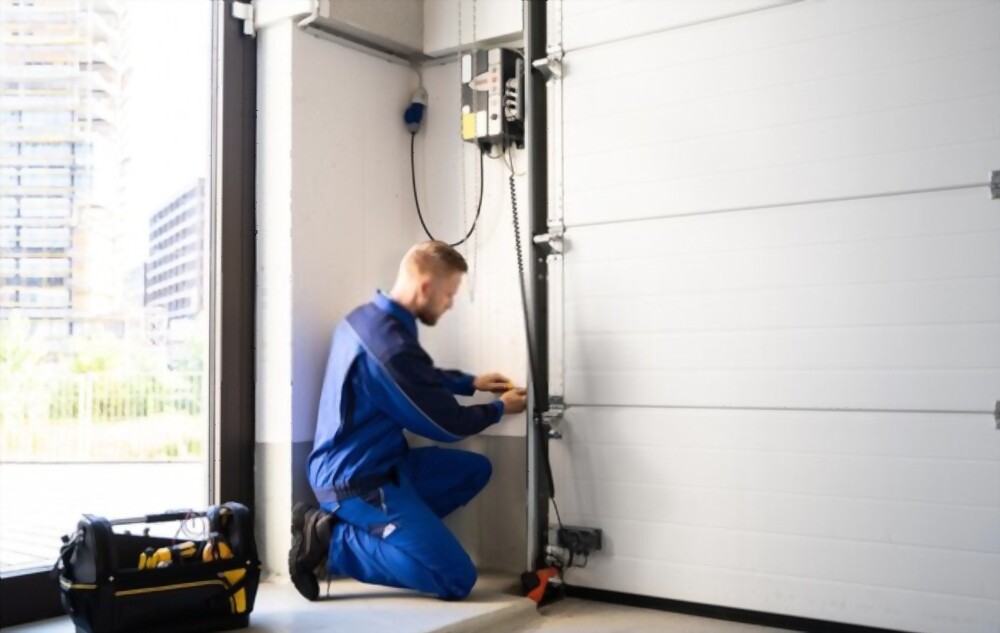
Garage door repair became a specialized trade for a reason. The U.S. Bureau of Labor Statistics classifies Mechanical Door Repairers as a separate occupation, and the industry overview cited there notes roughly 1,500 to 1,600 garage-door-related injuries occur annually in the United States. That's why springs, cables, and related high-tension parts are never DIY territory in my book. You can review that occupation listing and safety context on the Bureau of Labor Statistics page for Mechanical Door Repairers.

Before you grab a tool, look at this checklist.

A safety infographic showing four essential steps for safely troubleshooting garage door issues at home.

What's safe to check

  • Look, don't touch: Stand back and inspect the springs, cables, rollers, and tracks without putting your hands on anything under load.
  • Clean the photo eyes: The safety sensors near the floor should face each other cleanly. Wipe the lenses gently and make sure nothing is blocking the beam.
  • Check the power basics: Test the wall button, replace remote batteries, and confirm the opener is plugged in.
  • See if the manual lock is engaged: Some doors have a slide lock that can keep the door from moving even when the opener runs.

The one safe way to use the red cord

The emergency release cord is useful, but only when used correctly. Pulling it with the door open or partly open can be risky if the door is out of balance.

If you need a refresher on that part, this guide to the garage door emergency release cord explains when and how to use it safely.

What you should not touch

Do not loosen, remove, or adjust any of these parts:

  • Torsion springs: These are mounted above the door and store heavy lifting force.
  • Extension springs: These stretch along the horizontal tracks and also hold dangerous tension.
  • Lift cables: If one is frayed, loose, or off the drum, the door can shift suddenly.
  • Bottom brackets: Those brackets connect directly to the cable system and carry spring tension.

If a repair involves winding bars, set screws, drums, or cable tension, it's no longer homeowner troubleshooting.

A simple decision test

If your next step requires strength, force, or disassembly, stop. Safe troubleshooting is visual, basic, and reversible. You're checking power, alignment, and obvious obstructions. You are not trying to out-muscle the system.

That approach protects you, your opener, and the door itself. It also makes the service call cleaner if a pro does need to step in.

Understanding Garage Door Repair Costs in Cleveland

The first question most homeowners ask is fair. What's this going to cost me?

A market report on garage door repair services puts the average repair ticket at $150 to $350, and it also notes that spring replacement is the most common single repair, representing about 31% of repair calls. The same report describes garage door repair as a large service category, with the global market valued at $3.8 billion in 2025 and projected to reach $6.4 billion by 2034 at a 5.9% CAGR. It also says the residential segment accounts for 58.7% of revenue, or about $2.23 billion, and that repair and maintenance services make up 46.2% of service-market share in 2025, according to the garage door repair services market report.

That big-picture data matches what homeowners feel on the ground. This isn't a rare specialty expense. It's a common home repair category.

An infographic detailing average costs for common garage door repairs in Cleveland, including springs, openers, cables, and sensors.

What changes the final bill

The same symptom can lead to different invoices depending on what's failed.

A basic sensor issue is different from a spring job. An opener that needs adjustment is different from one with a failed motor or damaged rail. The final cost usually comes down to parts, labor complexity, and how urgent the call is.

Here are the biggest cost drivers:

  • Timing of service: Emergency or after-hours calls can increase the bill.
  • Part type: Springs, cables, rollers, sensors, and opener parts all have different cost profiles.
  • Door setup: A heavier insulated door puts different demands on hardware than a lighter door.
  • Scope of repair: One failed part can expose wear in related parts once the system is tested.

What a free estimate helps with

A good estimate should tell you what failed, what needs immediate attention, and what can wait. It should also separate a true safety repair from optional upgrades.

If you want to compare options before scheduling, asking for free garage door repair estimates is the smartest way to avoid sticker shock.

The cheapest quote isn't always the lowest real cost if it leaves worn parts in place and sends you back into another service call a month later.

In Cleveland, weather and frequent daily cycling can be rough on moving parts. That's one reason transparent pricing matters. You're not just paying for a quick adjustment. You're paying to get the door balanced, safe, and dependable again.

Red Flags That Mean Call A Professional Immediately

Some garage door problems leave room for safe checking. Others don't. When these show up, the right move is to stop using the door and call a technician.

The loud bang followed by a dead or heavy door

That sudden bang often means a major lifting component has failed. Homeowners sometimes think a vehicle hit something in the garage because the sound is that sharp.

If the door now feels very heavy, won't stay in position, or only rises a few inches, don't keep testing it. Repeated opener cycles can burn out the motor or twist the door further.

Frayed cables or a cable hanging loose

A cable should never look fuzzy, bird-nested, or slack on one side. When a cable starts to fail, the door can lift unevenly and shift fast.

This is one of those repairs that looks simpler than it is. The cable is part of a loaded system. Touching the wrong bracket or trying to rewind it by hand can go badly in a hurry.

The door drops fast or slams shut

A healthy garage door should move in a controlled way. If it falls quickly, the counterbalance system isn't doing its job.

That's dangerous for people, pets, and anything stored underneath. Keep everyone clear of the opening until it's repaired.

The door is off track

When rollers leave the track, the whole assembly becomes unstable. You might be tempted to shove it back into place with a pry bar or mallet. Don't.

Once a door is off track, the problem usually isn't just position. There's often a reason it came out in the first place, such as impact damage, worn rollers, bent track, or a balance issue.

Stop immediately if you see any of these

  • A visible gap in a torsion spring
  • One side of the door higher than the other
  • The bottom corner lifting unevenly
  • The opener pulling hard while the door barely moves
  • Rollers outside the track
  • A door section bent enough to rub or bind

Trying to “just get it closed for tonight” is when a manageable repair often turns into a bigger one.

A good rule for homeowners

If the problem involves weight, tension, or a door that won't travel straight, it's professional territory. You don't need to diagnose every part perfectly. You just need to recognize when the system is no longer safe to operate.

That decision alone prevents a lot of injuries and a lot of expensive follow-up damage.

Your Local Cleveland Garage Door Repair Solution

When a garage door quits in Northeast Ohio, most homeowners want three things. A fast response, a clear explanation, and somebody local who knows the area and shows up prepared.

Danny's Garage Door Repair serves the Greater Cleveland area from offices in Pepper Pike and Brunswick, handling residential and light-commercial work including spring and cable replacement, opener installs and programming, off-track corrections, tune-ups, new doors, and general repairs for major brands.

Screenshot from https://garagedoors101.com

What matters when you choose a company

A garage door contractor should be easy to verify and easy to talk to. Licensed, bonded, and insured matters. So does whether they explain the repair in plain English before touching the door.

For homeowners comparing local providers, it also helps to know how a company presents itself online. If you're checking reviews and local listings, Netco Design's local SEO tips give a useful overview of what a complete and trustworthy Google Business Profile should include.

What practical service looks like

Good garage door service is rarely about flashy promises. It's about showing up with the right springs, rollers, cables, and opener parts for the job, then explaining what failed and why.

That means things like:

  • Emergency response when needed: Helpful when the door is stuck open, off track, or trapping a vehicle.
  • Free estimates: Useful when you're deciding between repair and replacement.
  • Clear scope of work: You should know whether the fix is a reset, a hardware replacement, or a larger rebuild.
  • A satisfaction guarantee: Not as a slogan, but as a clear commitment to correct the work if something isn't right.

Local knowledge makes a difference

Homes in Cleveland, Beachwood, Chagrin Falls, Pepper Pike, Brunswick, and nearby suburbs don't all have the same setup. Some have older wood or steel doors with aging hardware. Others have insulated sectional doors and newer belt-drive openers with smart controls. Light-commercial overhead doors add another layer.

A local technician usually spots those differences quickly. That means less guessing, fewer delays, and a repair approach that fits the door you have.

Proactive Maintenance to Prevent Future Repairs

Most garage doors don't fail all at once. They wear down in small ways first. A roller gets noisy. A hinge loosens. The opener starts working harder than it should. A little routine care can catch those issues before they turn into a stuck door on a freezing morning.

A homeowner checklist that actually helps

You don't need a full tool bench for basic upkeep. You need consistency.

  • Lubricate moving metal parts: Use a garage-door-appropriate lubricant on hinges, rollers, and spring surfaces where appropriate. Skip heavy grease on tracks.
  • Watch the door move: Open and close it a few times and listen for rubbing, popping, or hesitation.
  • Clear the tracks: Remove leaves, dirt, and buildup. Tracks should be clean, not packed with lubricant.
  • Tighten obvious loose hardware: Only on accessible brackets and fasteners that are not tied to spring tension.

Safety checks worth doing seasonally

The auto-reverse feature should work every time. Test it according to your opener manufacturer's instructions. Also check the photo eyes near the floor to make sure they're clean and lined up.

Look over the weather seal at the bottom of the door too. In Northeast Ohio, water, slush, and debris around the threshold can lead to sticking, uneven closing, and extra strain on the opener.

A quieter garage door is usually a healthier garage door. New noise is often your first warning sign.

What maintenance does not include

Routine maintenance does not mean adjusting spring tension, resetting cable drums, or forcing a stiff door into movement. Those jobs move out of maintenance and into repair fast.

If the door feels heavier than usual, sits unevenly, or starts jerking through its travel, stop treating it like a tune-up issue. That's when an inspection makes more sense than more lubricant.

The long-term payoff

Preventive care helps in two ways. First, it reduces surprise breakdowns. Second, it helps you spot a repair while it's still small enough to schedule on your terms instead of during an emergency.

For many homeowners, the smartest plan is a mix. Handle simple visual checks and basic lubrication yourself, then bring in a technician when the door starts giving mixed signals or when you want a professional safety tune-up before winter or after a hard season of daily use.


If your garage door is stuck, crooked, loud, or otherwise not acting right, Danny's Garage Door Repair is one local option for homeowners across Greater Cleveland who want a licensed, bonded, and insured team, 24/7 emergency service, free estimates, and straightforward help with springs, cables, openers, off-track doors, and full garage door repair.

Share:

More Posts

Send Us A Message