Skip to content




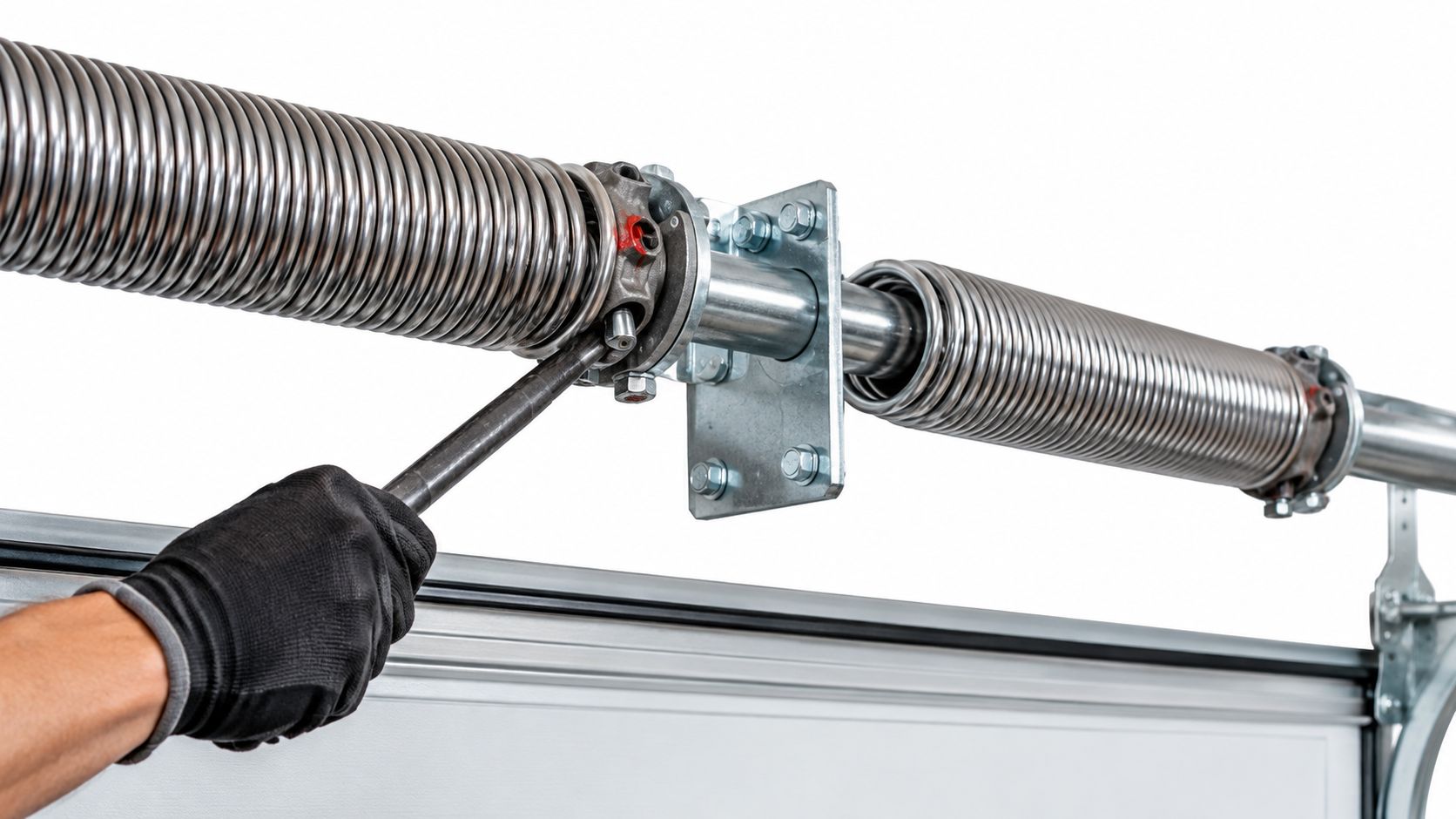
A 10,000-cycle spring lasts about 6.8 years at four uses per day, but a busy commercial door can exhaust that same rating in about seven months. For heavy duty garage door springs, cycle life matters more than calendar years.
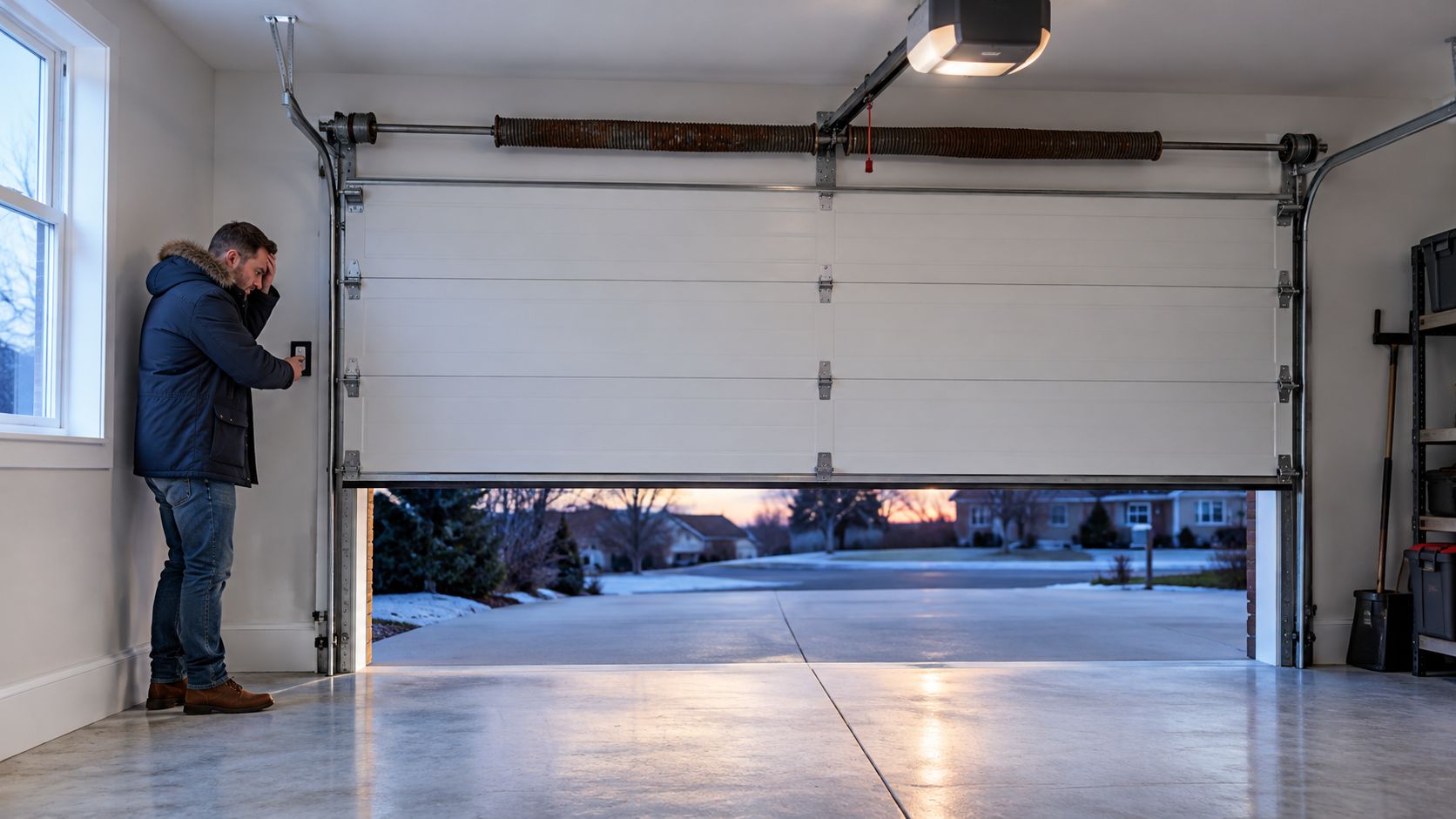
That difference becomes obvious on a cold Cleveland morning. You press the opener button, hear the motor strain, and watch the door rise a few inches before stopping or reversing. Sometimes the door feels unusually heavy when you lift it by hand. Sometimes there's a clean gap in the spring coil, or a sharp bang that leaves the garage door stuck closed.
The tempting diagnosis is a weak opener. Often, the opener is only reacting to a counterbalance problem. Springs carry much of the door's weight, and the right replacement depends on door weight, spring torque, operating frequency, hardware condition, and expected service life. A larger-looking spring isn't automatically safer, stronger, or a better value.
Why Your Garage Door Feels Heavier Than It Should
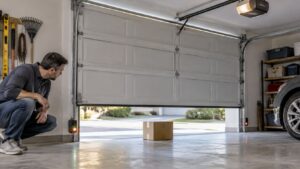
A homeowner in Pepper Pike may notice the problem during a normal morning routine. The family car is ready, the garage is cold, and the door that usually opens smoothly suddenly groans. The opener runs, but the door barely moves. When the opener is disconnected, the door feels far heavier than it did the day before.
That usually means the counterbalance system isn't doing its job. A garage door spring stores energy and transfers lifting force through the cables, drums, shaft, or pulleys. When the spring breaks, loses tension, or no longer matches the door, the opener has to handle weight it wasn't meant to lift by itself.
Signs the spring is losing the fight
Look for a combination of symptoms rather than one isolated noise:
- The door feels heavy by hand: A properly balanced door shouldn't require unusual effort to lift.
- The opener strains or reverses: Excessive resistance can make the opener stop, reverse, or operate unevenly.
- The door lifts crookedly: A cable, drum, or spring problem can make one side rise before the other.
- The spring has a visible gap: A separated coil usually means the spring has broken.
- The cables look slack: A failed spring can leave lift cables loose or displaced.
- The door stops short: Binding tracks, rollers, frozen seals, and spring problems can all cause this symptom.
Cold weather can make the problem more obvious, but it often exposes wear that has been developing for a long time. An opener that keeps trying to lift an unbalanced door may also place extra stress on its drive components, tracks, and panels.
Practical rule: If the door suddenly becomes heavy, stop repeatedly cycling the opener. Arrange an inspection before a small counterbalance problem becomes a damaged-door problem.
A heavy duty spring may be the right replacement, but only after the technician checks the complete system. Replacing a spring without correcting a binding track, worn roller, damaged cable, or poor balance just moves the failure down the road.
Understanding Torsion and Extension Spring Systems
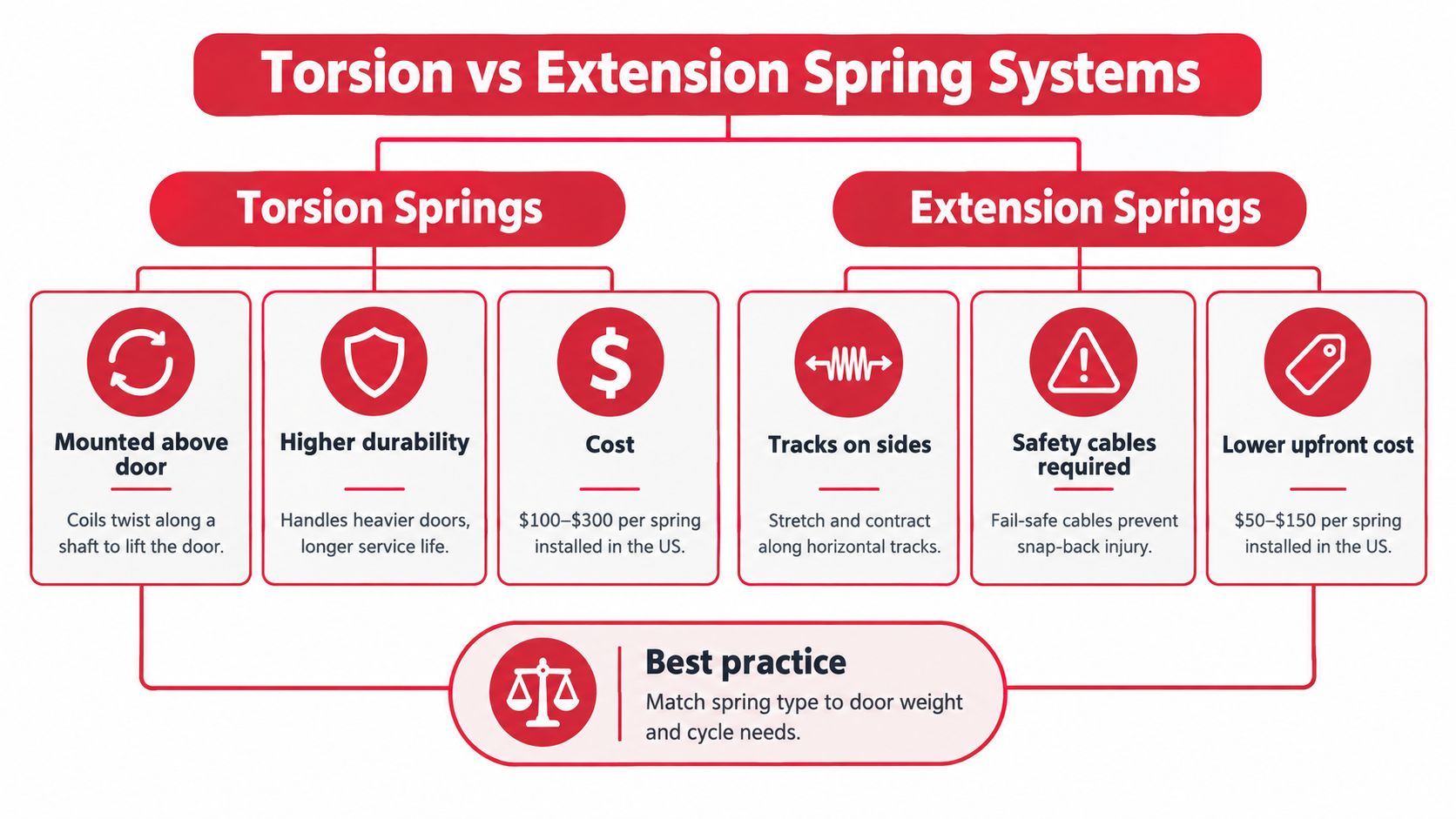
Torsion springs mount above the door on a steel shaft. They store force by twisting, then feed that torque through cable drums to lift the door. Extension springs mount along the horizontal tracks and stretch as the door closes, then pull back through pulleys and cables when the door opens.
That difference matters in day to day use. Torsion setups usually give a steadier, more controlled lift, especially on heavier doors or doors that get used often. Extension systems can still do the job, particularly where headroom is limited, but they depend on more moving parts, and each of those parts has to stay in good shape.
How to identify the system above your door
Stand inside the garage with the door closed. Look, don't touch.
- Check above the opening. A shaft with one or more tightly wound springs means you have a torsion system.
- Check along the horizontal tracks. Long springs mounted parallel to those tracks mean you have an extension system.
- Look for restraint hardware. Extension springs should have safety cables running through them.
- Follow the lift cables. Torsion systems use drums at the ends of the shaft. Extension systems use pulleys and side-mounted cables.
That quick inspection tells you more than the spring type. It also shows whether the door has the hardware needed to run safely.
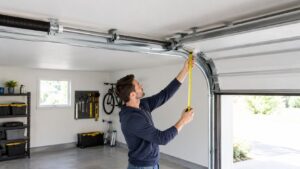
If you are comparing repair options, start with the existing layout before you start shopping. A replacement spring has to match the door's geometry and hardware. Spring type, winding direction, inside diameter, wire diameter, coil length, drum setup, and required torque all have to work together. I see homeowners get into trouble when they order by appearance alone and end up with a spring that physically fits the space but will not balance the door.
For a broader overview of layouts and hardware, the guide to different types of garage door springs is useful background. It helps you identify what you have, but it does not replace measuring the actual door and verifying the installed components.
Why the thicker spring assumption fails
A heavier-looking spring is not automatically a better buy. Thicker wire changes spring rate, available torque, and the number of winding turns needed. It can also change whether the spring fits the shaft, drums, and available space.
That is the hidden decision with so-called heavy-duty upgrades. If your door cycles a few times a day, paying more for a higher-cycle setup may not pencil out. If the door is the main entry and runs constantly, the math can favor it. Either way, the right question is the same: what torque does this door need across its travel, and can the full system deliver it safely?
A University of Nebraska engineering analysis calculated a spring rate of 36.6 inch-pounds per turn and about 265 inch-pounds of torque after 7.25 winding turns in its example. That example shows why spring selection is a measurement and application job, not a visual upgrade.
How Cycle Ratings Determine Spring Life
A spring can look fine and still be near the end of its service life. What matters is how many times it lifts and lowers the door. One cycle is one full trip up and one full trip back down.
For rolling sheet doors, ANSI/DASMA 207 sets a minimum design benchmark of 10,000 operating cycles, and that rating is based on tested opening and closing movement counts, not guesswork according to the ANSI/DASMA standard.
Convert your daily use into annual wear
This is the math that tells you whether a high-cycle spring is worth paying for.
Count how many full opening-and-closing trips your door makes in a normal day. Include the morning exit, the return home, kids going in and out, trash day, yard work, and anything else that runs the door.
Use this formula:
Daily cycles × 365 = estimated annual cycles
Then compare that number to the spring's cycle rating. Service life depends on balance, corrosion, temperature, door weight, spring sizing, and installation accuracy. If you want a broader explanation of the numbers behind wear, this guide on garage door spring lifespan and cycle expectations adds useful context.
The residential versus commercial split helps put the rating in perspective. An older ANSI/DASMA specification describes a commercial sectional door as normally expected to operate fewer than 5,000 cycles per year, while a residential door is normally expected to operate fewer than 1,500 cycles annually. At those usage levels, a 10,000-cycle spring lines up mathematically with about 2 years at 5,000 cycles per year and about 6.7 years at 1,500 cycles per year.
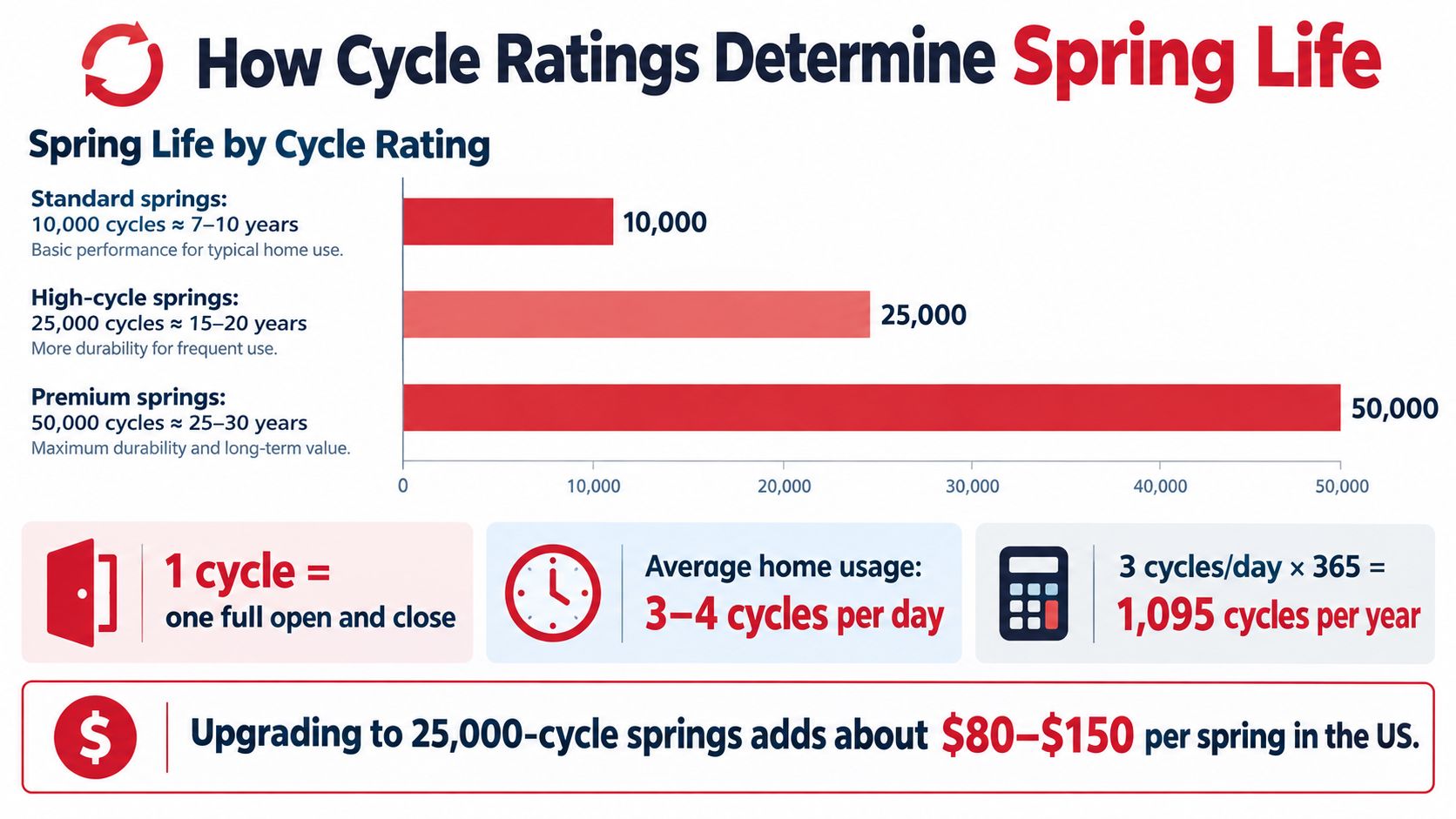
For a simple household example, four cycles per day works out to about 1,460 cycles per year. A nominal 10,000-cycle spring therefore pencils out to roughly 6.8 years on paper. Households vary in daily cycle counts, so the value of a higher-cycle spring depends on how the door is used, not on marketing language.
Why commercial doors need different thinking
High-cycle upgrades make the most sense when downtime has a real cost.
A service shop, fleet bay, apartment garage, or car wash can run a door far more often than a single-family home. At 50 cycles per day, a door reaches about 18,250 cycles in a 365-day year, so a 10,000-cycle rating can be used up in roughly seven months before you even factor in the rest of the hardware as illustrated in this industry example.
That is why cycle rating belongs in every replacement conversation. Heavy-duty only means something when the rated cycle life matches the door's real workload and the spring is still the correct size and torque for the job.
When Heavy-Duty Springs Are Worth the Investment
A high-cycle spring earns its place when the door's usage justifies it. The decision should compare expected cycles, replacement frequency, downtime risk, and the condition of the rest of the door, not just the spring's advertised rating.
For example, four cycles per day produce about 1,460 cycles per year. At that usage, a 10,000-cycle spring represents roughly 6.8 years, while a 25,000-cycle spring represents about 17.1 years mathematically. These are theoretical comparisons, not promises, because corrosion, balance, installation, and hardware wear still matter as explained in this spring-life guidance.
Cycle Rating Comparison by Usage
| Daily Cycles | 10,000-Cycle Rating | 25,000-Cycle Rating | 50,000-Cycle Rating |
|---|---|---|---|
| 4 | About 6.8 years mathematically | About 17.1 years mathematically | About 34.2 years mathematically |
| 10 | About 2.7 years mathematically | About 6.8 years mathematically | About 13.7 years mathematically |
| 50 | About 7 months mathematically | About 1.4 years mathematically | About 2.7 years mathematically |
The table compares cycle arithmetic only. It doesn't establish a warranty period or a guaranteed replacement date.
Where the upgrade usually makes sense
A high-cycle option deserves serious consideration when:
- The door operates frequently: Apartment buildings, warehouses, service bays, and small commercial facilities can use a spring rating quickly.
- Downtime disrupts work: A failed door can delay deliveries, vehicle movement, or customer access.
- The ownership period is long: A landlord or property manager may prefer fewer scheduled interruptions over the lowest initial price.
- Several drivers share one garage: A household with multiple vehicles may cycle the door far more than a quiet single-car home.
- The door is otherwise sound: A high-cycle spring won't compensate for damaged drums, worn bearings, corroded cables, or a failing opener.
When standard is reasonable
A 10,000-cycle spring may be a sensible choice for a lightly used residential door when the door is correctly balanced and the owner isn't paying for service frequency the household doesn't need. Choosing 50,000 cycles for a low-use garage can be poor economics if the rest of the door needs attention first or if the owner expects to replace the door soon.
The useful calculation is upfront difference divided by expected additional cycles, then adjusted for emergency inconvenience. The exact price varies by spring, door, labor, and market, so ask for the rating and the installed scope rather than accepting “heavy-duty” as a complete explanation.
Winter Conditions and Spring Failure Myths
Cleveland winters can expose a weak garage door system, but cold weather isn't the whole diagnosis. Spring wire can become more brittle and weaker in low temperatures, and wear is affected by usage, humidity, and temperature fluctuation as discussed in this industry reporting.
The more useful question is what the cold revealed. A door that binds against a frozen bottom seal, drags on a damaged roller, or meets an obstruction in the track can place abnormal load on the opener and counterbalance system. A high-cycle spring won't cure any of those conditions.
A safe pre-winter inspection
You can inspect visible components without adjusting a spring:
- Watch the door travel: Notice hesitation, scraping, stopping short, or reversal.
- Check the bottom seal: Look for ice, water damage, tearing, or a seal stuck to the floor.
- Observe the tracks: Remove loose debris from the track area, but don't bend or realign the tracks.
- Look at rollers and hinges: Worn or seized rollers can make the door feel heavy.
- Inspect cables and drums visually: Slack, fraying, or a cable out of its drum needs professional attention.
- Look for corrosion: Rust on springs, cables, drums, or fasteners can signal a broader maintenance issue.
- Notice balance symptoms: A door that won't stay in position after professional testing may have a counterbalance problem.
A door becoming heavy, stopping short, or reversing can indicate a broken or under-tensioned spring. It can also indicate frozen seals, track obstruction, worn rollers, cable trouble, or opener-force settings. Don't assume the spring is responsible just because the failure happened during a cold snap.
Cold weather may be the final trigger, but the repair still has to address the part that created the abnormal load.
Never adjust or remove a loaded torsion spring without trained help. Seasonal maintenance is valuable when it identifies binding and corrosion early. It becomes counterproductive when it turns into an unsupported spring adjustment.
The Safety Risks of DIY Spring Replacement
Garage door springs are safety-critical components because they store substantial mechanical energy while supporting the door. A loaded torsion spring can release rotational energy suddenly if a winding bar slips, the wrong tool is used, or the spring is incorrectly sized.
ANSI/DASMA 103-2017 sets performance and prescriptive requirements for counterbalance components under tension, including torsion springs, extension springs, cables, drums, and restraining devices. Its testing protocol cycles three units of each restraining-device type with the maximum design spring load at 1.5 times the spring's rated number of cycles, and it requires the device to contain the spring, end loops, and pulleys when the spring is destroyed under the standard's test requirements.
Why the tools matter
Technical spring-sizing guidance warns that a broken or incorrectly sized spring can fail violently. It recommends proper winding bars, eye protection, and trained installation, rather than screwdrivers, adjustable wrenches, or improvised tools for the mechanical safety rationale.
Disconnecting the opener before spring work prevents the motor from moving the door while someone handles the counterbalance system. The door also needs to be secured against movement, and the spring tension must be released and applied in a controlled sequence.
A commercial specification may require a torsion-spring counterbalance assembly with a winding device carrying a torsional safety factor of 4. That requirement illustrates the difference between a complete engineered system and a replacement part selected by appearance.
More spring doesn't mean more safety
Too little torque can leave the opener carrying excessive load and prevent the door from staying open. Too much torque can make the door rise unexpectedly or place excess stress on drums, cables, and hardware. A larger wire diameter isn't automatically safer unless the spring, winding amount, drum geometry, door weight, and containment arrangement all match.
For practical background on the specialized equipment involved, see this guide to garage door spring winding tools. Reading about the tools isn't the same as having the training to use them under load.
Professional installation isn't just a convenience for this repair. It protects the person handling the spring, the people near the door, and the door's balance after the work is complete.
Next Steps for Cleveland Homeowners
Start with observations, not adjustments. From outside the spring zone, note whether the door opens evenly, whether the opener strains, whether the cables remain seated, and whether the door has visible damage or corrosion. Don't remove covers, unwind coils, pull cables, or test a loaded spring.
Write down the details a technician will need:
- Door location: Give the neighborhood or community, such as Beachwood, Brunswick, Pepper Pike, or Chagrin Falls.
- Usage pattern: Describe whether the door serves a single-family garage, a multi-unit property, or a light-commercial facility.
- Symptoms: Mention a loud snap, heavy manual lifting, reversal, crooked travel, or a door that won't open.
- System type: Say whether you see a torsion spring above the door or extension springs beside the tracks.
- Recent changes: Include cold-weather problems, water intrusion, impact damage, or a recent opener replacement.
Questions that reveal a sound repair plan
Ask what cycle rating the technician recommends and why. A credible answer should connect the rating to your daily use, ownership expectations, and door condition.
Also ask whether the quote includes balance testing, cable and drum inspection, roller and bearing checks, opener operation, and a review of visible corrosion. If the recommendation is “install the biggest spring,” without measuring the door or discussing torque, get another opinion.
Danny's Garage Door Repair provides spring and cable replacement, safety tune-ups, free estimates, and 24/7 emergency service for residential and light-commercial doors in the Greater Cleveland area. The company serves communities including Cleveland, Pepper Pike, Brunswick, Beachwood, and Chagrin Falls, with explanations focused on the actual door rather than a generic spring package.
A good replacement leaves the door balanced, the cables properly seated, the opener operating without excessive strain, and the owner clear about the selected cycle rating. That's the practical value of professional service. You're not just buying a coil of wire, you're restoring the counterbalance system that lets the entire door work safely.
Danny's Garage Door Repair can inspect your door, explain whether a standard or high-cycle spring fits your actual usage, and provide a free estimate for the work. Visit Danny's Garage Door Repair to arrange spring replacement, cable service, or a safety check in the Cleveland area.